Peptides vs. Supplements: What's the Difference?

Unlocking your best health often starts with the basics: vitamins, minerals, or other supplements many people take daily to fill nutritional gaps and support their bodies. As new wellness therapies enter the spotlight, peptide therapy is generating growing interest and a fair share of questions. If you already rely on supplements to help optimize your health, you may wonder if peptides are simply another pill or powder to add to your routine, or if they represent something fundamentally different.
This article breaks down peptides vs supplements, helping you understand how each works, their unique roles in wellness, and why peptide therapy is increasingly seen as a personalized, targeted approach. By demystifying the science, you can make informed decisions about your health journey. At Lavender Reine Wellness, we pride ourselves on evidence-based guidance, so you can feel confident exploring options that may support your long-term wellbeing.
What Are Dietary Supplements?
Dietary supplements are a familiar part of many wellness routines. These products come in many forms: capsules, powders, gummies, and drinks. What they have in common is that they deliver nutrients or compounds that may be missing from your daily diet. The most common types include:
Vitamins (such as vitamin D, vitamin B12, or vitamin C)
Minerals (like magnesium, calcium, or iron)
Herbs and botanicals (such as ashwagandha or echinacea)
Amino acids (the building blocks of proteins)
Probiotics (beneficial bacteria for gut health)
Omega-3 fatty acids (commonly from fish oil)
Supplements are often used to fill nutritional gaps, maintain normal body function, or support specific health goals. For example, some people take vitamin D to compensate for limited sun exposure, while others use probiotics to support digestion. In most cases, supplements work by providing raw materials your body needs but may not get enough of from food alone.
It is important to recognize, however, that dietary supplements generally do not tell your body what to do with those nutrients. They supply the ingredients, but they do not instruct your cells how to use them.
What Are Peptides?
If supplements are the body’s raw materials, peptides are more like its messengers. Peptides are short chains of amino acids (usually 2-50 in length), and they occur naturally in the human body. What makes peptides unique is their ability to act as signaling molecules, carrying instructions between cells, tissues, and organs.
Peptides play a crucial role in cellular communication. Some peptides signal your body to produce hormones, others influence how your cells repair themselves, and some regulate immune responses. In essence, while supplements provide the nutrients, peptides provide the instructions, helping direct the body’s natural systems for optimal wellness.
This distinction explains why peptide therapy is not simply another supplement. It operates at the level of cellular communication, supporting your body’s own processes in more targeted ways.
How Peptides and Supplements Work Differently
To make these differences clearer, here’s a side-by-side comparison highlighting the unique aspects of peptide therapy vs supplements:
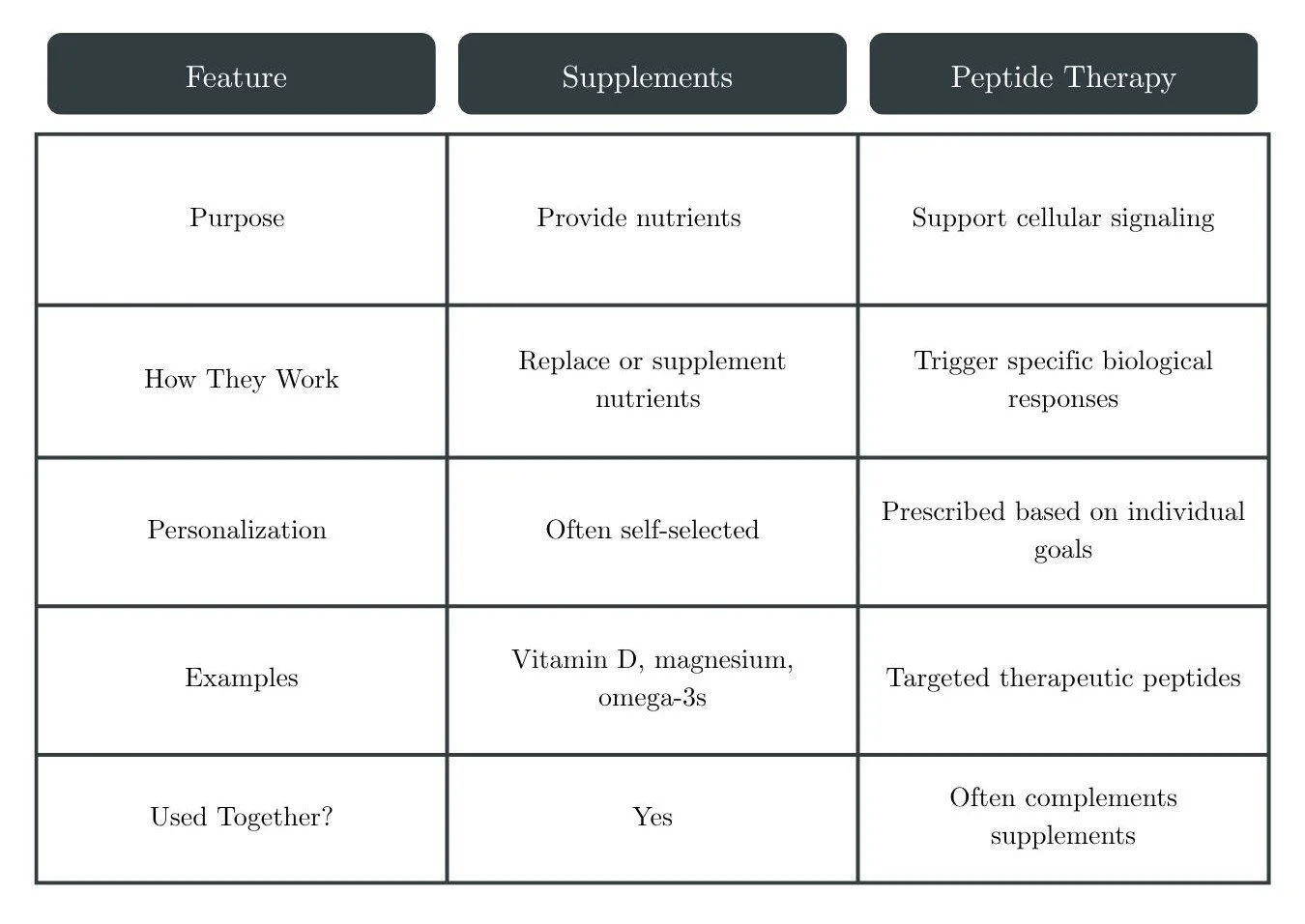
Supplements Help Provide Nutrients
Supplements have an essential role in many people’s wellness plans. They help deliver nutrients that are missing from the diet or that the body needs in greater amounts. For example, iron supplements can help prevent anemia, while vitamin B12 supports nerve function and energy. Amino acids, found in protein powders or standalone supplements, are vital for muscle repair and growth. Probiotics help maintain a healthy gut flora, and omega-3s support heart and brain health.
The main function of dietary supplements is to ensure your body has the basic building blocks required for health. They help prevent nutritional deficiencies and can support your overall well-being, especially when taken as part of a balanced, nutrient-rich diet.
Peptides Support Cellular Communication
Peptides, by contrast, work at a different level. They act as precise messengers, instructing your body’s cells to perform specific functions. Examples include peptides that stimulate collagen production for healthy skin, those that support the release of growth hormone for recovery and muscle repair, and others that regulate metabolism or immune response.
Peptide therapy is often prescribed when a targeted effect is desired. For instance, if someone is seeking improved muscle recovery, enhanced sleep quality, or metabolic support, a provider may select a specific peptide that has been clinically studied for that purpose. Rather than simply providing more of a raw ingredient, peptide therapy helps optimize the body’s natural signaling pathways, supporting more individualized wellness outcomes.
Why They Aren't Interchangeable
It’s important to recognize that peptides and supplements play different, but often complementary, roles. Peptides are not substitutes for essential nutrients like vitamins or minerals, just as supplements cannot replace the targeted effects of peptide therapy. Many people benefit from both: using supplements to support foundational health, and peptides to address specific wellness goals through cellular communication.
When Might Someone Consider Peptide Therapy?
Peptide therapy may be an appealing option for adults who already focus on healthy habits and want to take their wellness strategy a step further. While supplements are excellent for filling nutritional gaps, peptide therapy is often considered by those looking for targeted, advanced support in areas such as:
Healthy aging and longevity
Optimizing body composition and muscle recovery
Supporting metabolism and energy
Enhancing sleep and cognitive function
Promoting overall wellness and vitality
Recommendations for peptide therapy are always individualized. What works for one person may not be suitable for another. A thorough assessment by a qualified provider ensures that peptide therapy, if appropriate, is personalized to your unique health status and goals.
Benefits of Personalized Peptide Treatment
The benefits of peptide therapy can be broad, depending on the specific peptide chosen and the individual’s needs. Some peptides are commonly used to promote healthy aging by supporting cell repair and regeneration. Others may be selected to help with muscle recovery after exercise, enhance metabolic efficiency, or encourage restful sleep.
Unlike traditional supplements, which generally provide nutrients in set amounts, peptide therapy is often customized in both the selection of the peptide and the dosing protocol. This personalization allows for a more precise alignment with your wellness goals, whether that means supporting your recovery from workouts, managing stress, or optimizing hormonal balance.
The Individualized Journey to Your Optimal Self
One of the hallmarks of peptide therapy is its individualized approach. Providers consider your medical history, lifestyle, and goals when determining if peptide therapy might benefit you. There is no one-size-fits-all protocol; recommendations are adapted to your unique needs, helping you move toward your optimal state of health in a safe, measured way.
Can Peptides and Supplements Be Used Together?
In most cases, peptides and supplements are not mutually exclusive. In fact, many wellness professionals recommend a comprehensive approach that includes:
A balanced, nutrient-rich diet
Dietary supplements when needed to address specific deficiencies
Peptide therapy for targeted support
Regular exercise
Adequate sleep and stress management
This holistic strategy recognizes that wellness is multi-faceted. Peptides may help fine-tune your body’s internal communication, while supplements ensure you have the raw materials needed for those processes to work efficiently. When both are used under the guidance of a knowledgeable provider, they can complement each other for more robust results. IV Therapy is another method of delivering nutrients and hydration for optimal wellness. There are several transformational options that your provider will be happy to talk you through.
Is Peptide Therapy Right for Everyone?
While peptide therapy offers promising support for many wellness goals, it is not universally appropriate. The decision to pursue peptide therapy should be based on a thorough consultation, medical history, and a clear understanding of your health objectives. Providers will assess whether peptide therapy aligns with your needs, and if so, develop a personalized plan that may include both peptides and supplements, as well as lifestyle recommendations.
It is important to set realistic expectations. Peptides are not miracle solutions and do not replace the need for a healthy diet, exercise, sleep, or medically necessary treatments. They are best used as part of a comprehensive wellness approach, tailored to your unique circumstances.
Choosing the Right Wellness Strategy
There's no one-size-fits-all approach to wellness. While dietary supplements can help address nutritional deficiencies and support overall health, peptide therapy offers a more targeted approach by working with your body's natural signaling pathways. Depending on your health history, lifestyle, and goals, one option may be more appropriate than the other, or you may benefit from using both as part of a comprehensive wellness plan.
Rather than replacing healthy habits, peptide therapy is designed to complement them. A balanced diet, regular exercise, quality sleep, stress management, and appropriate supplementation all play important roles in long-term wellness. Peptide therapy can be another tool that supports these healthy lifestyle choices when recommended by a qualified provider.
With so many wellness options available today, it can be difficult to know where to begin. Working with an experienced provider helps ensure your treatment plan is based on your unique needs rather than trends or generalized recommendations.
If you're interested in learning more about peptide therapy, you may also find these resources helpful:
Discover a Personalized Wellness Plan at Lavender Reine Wellness
Peptides and supplements both have valuable roles in supporting overall health, but they work in fundamentally different ways. Supplements provide nutrients your body needs to function properly, while peptide therapy uses naturally occurring signaling molecules to support specific biological processes. Understanding these differences can help you make more informed decisions about your wellness journey.
At Lavender Reine Wellness in Montclair, CA, we take a personalized approach to wellness. During your consultation, we'll discuss your health history, lifestyle, and long-term goals to determine whether peptide therapy, nutritional support, or a combination of both is the right fit for you.
If you're ready to explore a customized approach to healthy aging, metabolism support, recovery, or overall wellness, schedule a consultation with our team. Together, we'll create a plan designed to help you achieve your goals with evidence-based care tailored to your individual needs.
About the Author

Ingrid is a Registered Nurse (RN, MSN), Founder of Lavender Reine Wellness, and Family Nurse Practitioner student specializing in Acute/Family Care and Integrative Health & Wellness. With 35 years of experience spanning business formation, medical staffing, and hands-on clinical care, including extensive work with cancer, autoimmune conditions, and primary care, Ingrid brings a rare depth of knowledge to every aspect of wellness. As the visionary behind Lavender Reine Wellness in Montclair, CA, she is passionate about helping clients age gracefully from the inside out through personalized, evidence-informed treatments that blend medical aesthetics with holistic well-being.